
Moulting
Moulting season can be a confusing time for chickens and keepers alike! Your chicken run may suddenly resemble a pillow fight gone wrong, and your birds may seem under the weather. So what’s it all about?
Moulting is simply the shedding of old feathers and replacing them with new. It’s expected around late summer / early autumn, and mirrors the moulting patterns seen in wild birds. It starts when the daylight length starts to reduce, which triggers hormonal changes and birds shift from egg-laying mode to replacing feather mode.
Why do birds moult?
Moulting allows birds to shed old feathers that may be worn out, damaged or infested with parasites. Autumn is the perfect time for this, it’s after the breeding season and before the cold of winter sets in.
Signs of moulting
Feather loss - sudden or subtle.
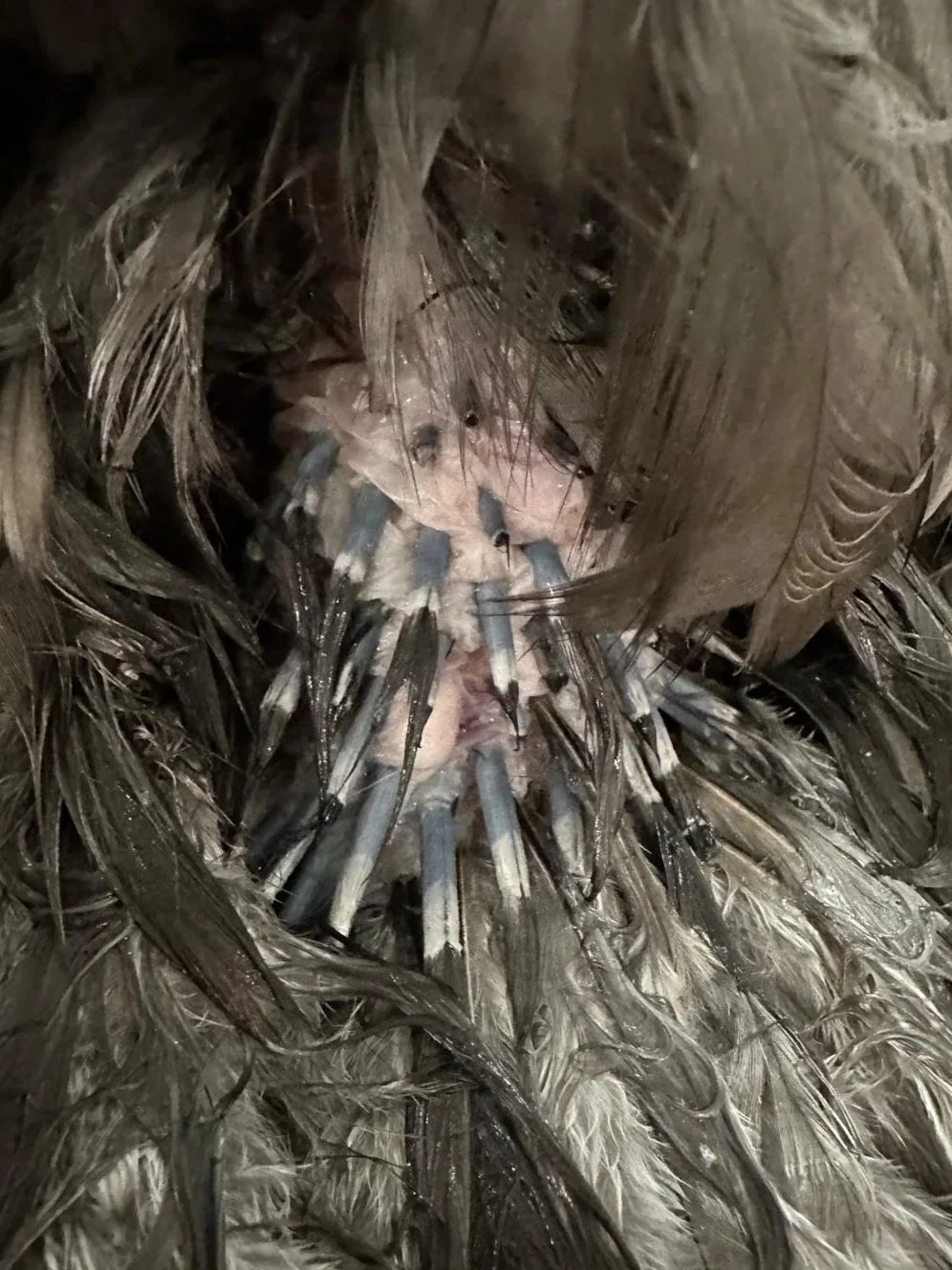
Pin feathers - new feather growth appears in a hard, tube-like protective sheath.
Fewer eggs - reduced egg number, or they stop laying altogether.
Irregularly shaped eggs tend to be more common as hens go off lay.
Moulting sickness - Birds may become quieter, less active, lethargic and withdrawn.
Behaviour changes - flighty, agitated, and resistant to being handled.
Weight loss - But good body condition (muscle padding over the breastbone) - a combination of feather loss and a resting reproductive tract can lead to a weight change of up to 25% less.
How do birds make new feathers?
Birds that fly would be very vulnerable to predators if they dropped all of their feathers at once, although chickens seem to do this!
Several hormones shift during a moult, and the reproductive hormones (oestrogen and progesterone) decline and prolactin and thyroid hormones take over. This triggers new feather growth in feather follicles in the skin.
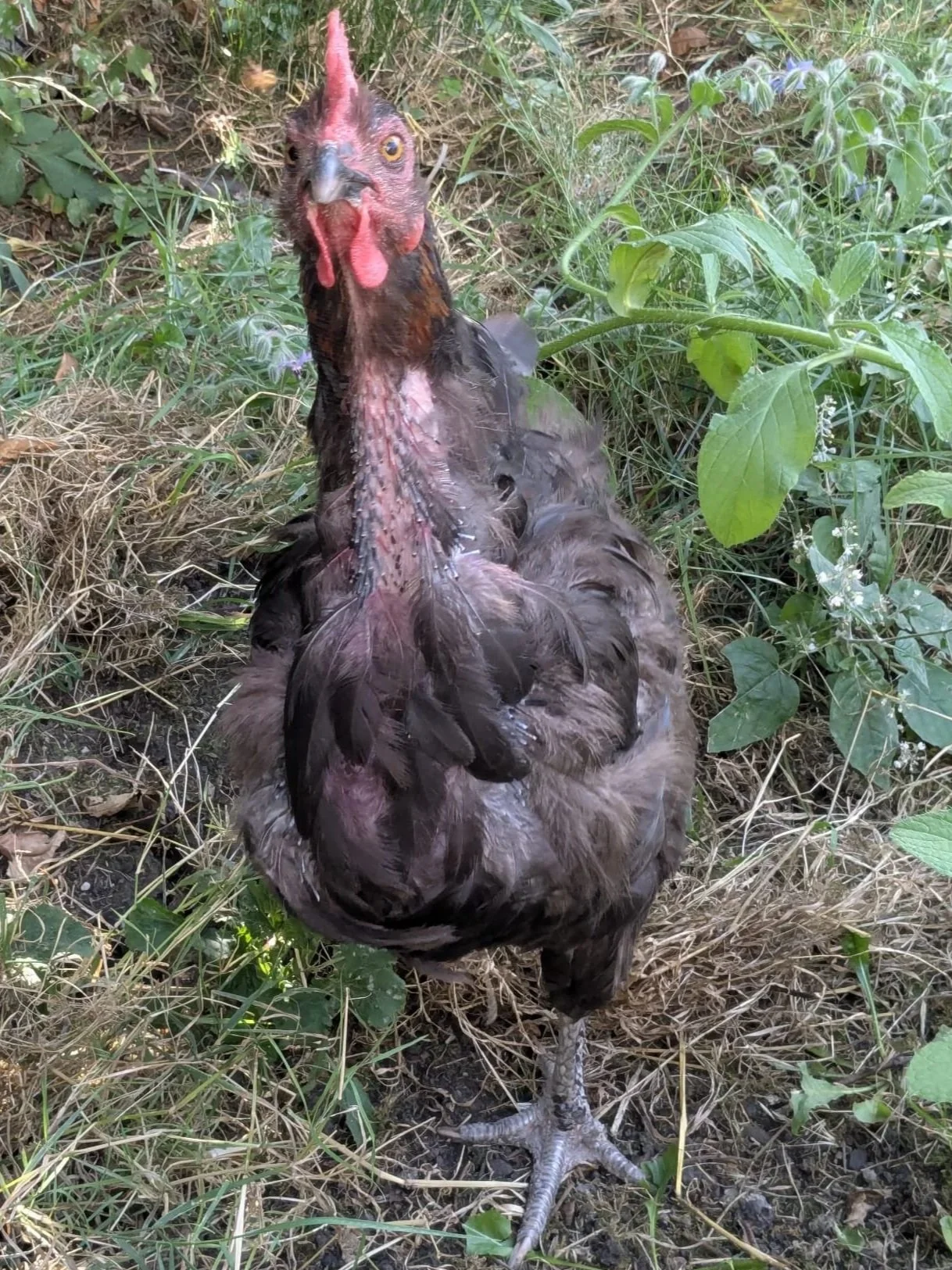
As feather follicles start to generate new feathers, they push the old ones out. We often see the old feathers shed, and a delay while the new ones start to come through, which is why our birds can look a bit scruffy for a while. Moulting usually starts at the head and neck and progresses along the back to the tail. It can last several weeks to months!
Feathers are made of the protein keratin, which is made from protein building blocks called amino acids. Cysteine is the most crucial amino acid building block for new feather growth. Feathers grow surrounded by a hard protective sheath, which can make the feathers feel prickly. Your birds will groom off the sheath when the feathers are ready. During this time, birds can seem agitated. Please minimise handling to reduce their stress.
How can I support my birds through a moult?
Chickens in the same flock can moult at different times, with different severities, and some hens may even continue to lay; we can end up with quite a mixed flock!
I would recommend keeping all birds on a standard protein ration of around 16% crude protein; grower’s or layers pellets are suitable, with mixed grit available for extra calcium if needed.
Birds will redirect their energy and protein to where it's required, i.e. away from egg laying and into feather growth - they can’t run a marathon and ride a bike at the same time!
Birds will do fine on a good quality, fresh feed during a moult, but if your birds are having a hard time or the moult seems to last a long while, you can add in a supplement.
Rate-limiting amino acids are essential for feather growth. These are better for moulting birds in the short term than giving more protein in the diet. Other feather growth helpers are calcium, biotin and zinc, plus some immune support.
Can chickens moult at other times of the year?
Moulting out of season can be due to stress or illness, and it can occur at any time. It has many potential causes. Watch out for other signs of illness, such as loss of muscle over the breast bone (body condition), weight loss, loss of appetite, changes in faeces or faecal staining around the vent feathers, and lethargy.
When to see the vet…
Hens can sometimes seem unwell during a seasonal moult, and it can be difficult to tell if the moult is causing this or if it's due to something else. If you’re concerned about any hens during a moult, contact the Chicken Clinic or your local vet for advice.